Localization QA vs. Localization QC: How High-Performing Teams Build Zero-Defect Multilingual Pipelines
Understand the exact engineering difference between preventive Localization QA (i18n architecture, CI linters) and detective Localization QC (live DOM checks, readability metrics, MQM) across any target market.
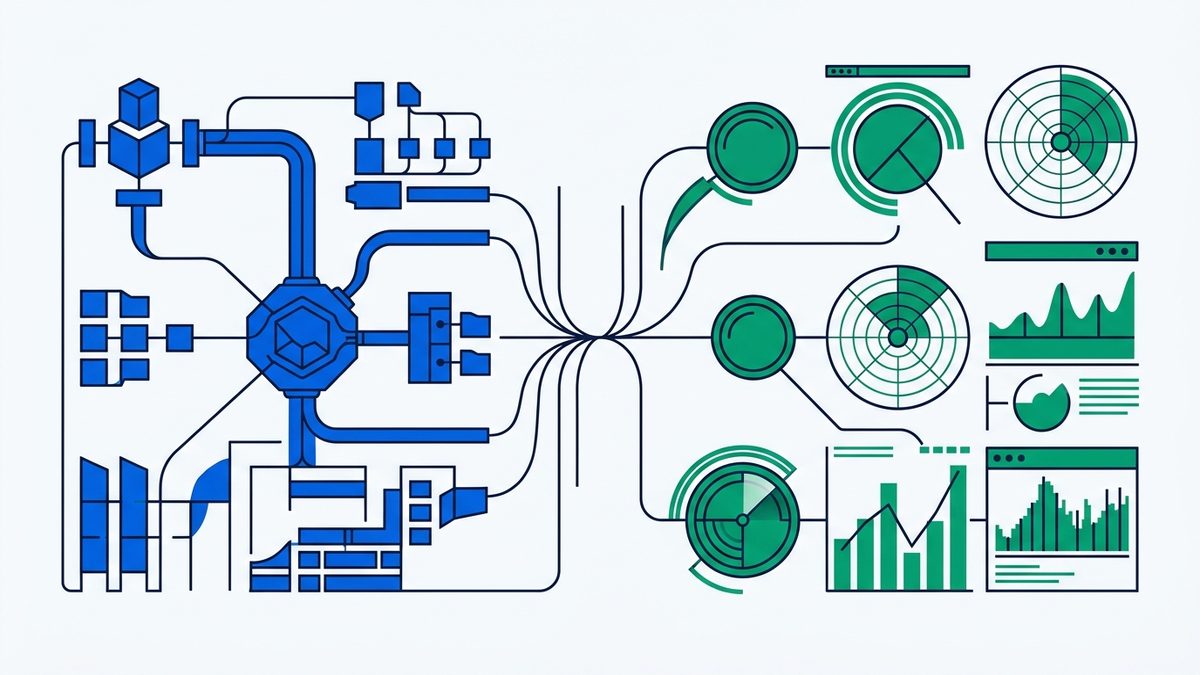
Many product and marketing teams use Localization QA (Quality Assurance) and Localization QC (Quality Control) interchangeably—then wonder why expensive post-translation proofreading still lets broken buttons, leaked source strings, and clunky copy slip into production week after week.
Treating localization strictly as a final editing pass guarantees firefighting. Separating preventive QA from detective QC turns international expansion into a repeatable, measurable engineering discipline across every language you ship.
Localization QA vs. Localization QC at a Glance
| Dimension | Localization QA (Process-Focused · Preventive) | Localization QC (Output-Focused · Detective) |
|---|---|---|
| Primary Goal | Prevent localization defects from ever being created | Catch linguistic, visual, and legal defects before customers see them |
| When It Runs | Design, i18n engineering, string extraction & CI/CD | Staging preview, post-import live DOM & pre-campaign sign-off |
| Core Owners | Frontend engineers, localization architects, product designers | Native LQA specialists, technical editors, automated DOM/CLI auditors |
| Key Artifacts | ICU message formats, glossary locks, CSS expansion rules, CI linters | Rendered DOM audits, LIX/WSTF-1 telemetry, MQM scores, patch CSVs |
| Typical Catch | Prevents split <strong> keys & hardcoded MM/DD dates | Catches literal calques, Sie/Du drift, clipped SERP titles & fallback cards |
Why Relying on Only One Half Fails
QA Without QC Produces "Technically Valid, Commercially Dead" Copy
You can configure flawless Next.js hreflang, pristine ICU pluralization, and clean UTF-8 encoding—and still publish wooden machine-translated copy that bounces enterprise buyers in four seconds. Automated i18n architecture cannot tell that a German hero headline scores LIX 68 or violates Swiss de-CH expectations by shipping ß to Zurich.
QC Without QA Creates Infinite Manual Rework
Conversely, asking native reviewers to manually spot missing percent spaces (40%), clipped meta titles (> 580px), or overflowing CSS buttons after every sprint wastes senior linguistic talent on mechanical bugs that a 50-millisecond CLI script catches deterministically in pull requests.
The Modern Hybrid LQA/LQC Stack (Automated + Native Precision)
Layer 1 — Automated CI Quality Assurance (Zero-LLM Linters)
Move mechanical checks straight into GitHub Actions so bad strings never reach staging:
- Typography & Spacing:
npx din5008-lint --fixcatches spacing, currency order, units, and quotes automatically. - Readability Thresholds:
npx german-lix-cli docs/de.md --max-lix 55blocks overly dense bureaucratic copy from merging. - Compliance & Register Drift:
npx dach-checkout-lint locales/de.json --swissflags risky buy CTAs, Sie/Du collisions, and Swissßleaks. - Technical SEO & Pixel Widths:
npx hreflang-serp-lintchecks 580px title truncation and reciprocalhreflangbefore deploy.
Layer 2 — Live Rendered DOM Quality Control
Once strings land on staging, audit the actual browser output—never an exported XLIFF spreadsheet:
- Extract visible headings, buttons, forms,
img[@alt], cookie banners, and meta tags. - Pair lexical quality (MQM) with objective readability telemetry (Amstad FRE, Björnsson LIX, WSTF-1).
- Perform targeted native transcreation on high-leverage revenue pages (Homepage Hero, Pricing, Checkout, Onboarding).
Applying This Framework Globally—With Deep DACH Benchmarks
While the QA/QC separation applies identically to French, Spanish, Dutch, Nordic, or Asian locales, German/DACH serves as an ideal stress test: its long compounds break brittle CSS, its formal/informal registers expose fragmented SaaS embeds, and its strict typography/legal standards reward engineering rigor immediately.
Inspect our deterministic 4-Index Methodology → | Run the 15-Tool Interactive QA Workbench →
Recommended Tools for This Playbook
Score German headlines, CTAs, and body prose across Amstad FRE, Björnsson LIX, Wiener WSTF-1, and MQM quality in one view.
Measure sentence length plus long-word ratio (>6 chars) to eliminate scanning fatigue in German B2B SaaS copy.
Calculate German school-grade reading load using deterministic vowel-cluster syllable counting.
Interactive pre-launch checklist covering WordPress menus, image descriptions, DIN 5008 spacing, formal "Sie" tone, and legal links.