The Complete Website Localization QA Checklist: 25 Pre-Launch Checks Across Languages
A deterministic 25-point Localization QA & QC checklist covering live DOM rendering, UI expansion, number/date formats, hreflang parity, and native tone across any language—backed by DACH field telemetry.
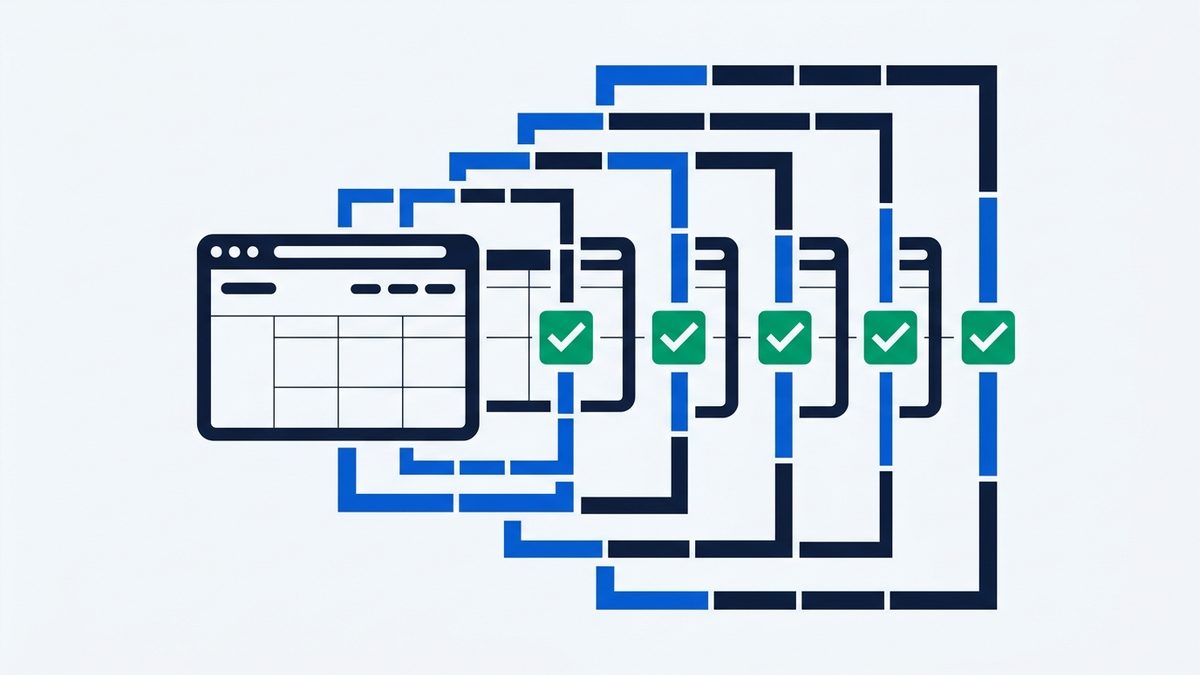
Shipping translated strings into production without a structured Localization QA (LQA) pass is the fastest way to burn paid acquisition budget and stall organic rankings across international markets. Whether you are launching French, Spanish, Japanese, or German routes, the exact same five defect classes slip past translation agencies every week—because translation memory tools (XLIFF, Phrase, Crowdin) inspect isolated strings, not the live rendered browser DOM.
Below is the 25-point deterministic Localization QA/QC checklist we apply across multilingual SaaS and e-commerce rollouts (with concrete examples from our flagship German/DACH engineering audits, where compound expansion and strict DIN/legal standards expose weak i18n setups fastest).
Phase 1 — Structural & Live DOM Integrity (Checks 1–6)
Before reading a single sentence for style, verify that the rendered DOM did not mangle your strings at runtime:
- Inline HTML Tag Concatenation: Inspect KPI counters, hero badges, and footnotes where
<strong>or<span>splits one clause into separate translation keys—a top cause of duplicated words and broken verb inflections. - Untranslated Fallback Feeds & Carousels: Confirm related blog cards, customer stories, testimonials, and CMS taxonomies never silently leak default English entries into localized routes.
- Hidden Attributes (
alt,aria-label,placeholder,title): Audit form placeholders, error tooltips, and imagealtstrings that CMS string exporters routinely omit. - Hard-Coded Third-Party Embeds: Inspect HubSpot forms, Calendly pickers, Stripe checkouts, Intercom launchers, and Cookie Consent banners so every visible button matches the host page language.
- Character Encoding & Diacritic Rendering: Confirm UTF-8 rendering for accented glyphs (
ä, ö, ü, ß, é, ñ, ç) across web fonts—especially bold display headings and PDFs. - Clean Locale Detection (No Forced IP Redirects): Never auto-redirect Googlebot or international buyers by GeoIP alone; allow clean manual switching with persistent preference.
Phase 2 — UI Layout, Responsive Wrapping & Text Expansion (Checks 7–11)
- Primary Navigation & Mobile Header Fit (
375px–390px): Languages like German, French, and Spanish expand 25–45 % over concise English UI copy. Verify zero horizontal scroll (scrollWidth <= clientWidth). - CTA Button & Tab Overflow: Ensure buttons allow graceful line wrap with
min-height: 44pxtap targets rather than clipping core verbs withtext-overflow: ellipsis. - Long Compound & Hyphenation Protection: Scope CSS
hyphens: autoandoverflow-wrap: break-wordto target-language prose blocks (html[lang="de"],html[lang="nl"]) while keeping headings clean. - Grid Column Containment (
min-w-0): Audit multi-column pricing tiers, comparison tables, and footers at1024px,1280px, and1440pxso wide localized subheaders never collide with adjacent columns. - RTL & Script Direction Readiness (When Applicable): For Arabic or Hebrew routes, test logical CSS properties (
margin-inline,padding-inline,text-align: start) instead of physical left/right offsets.
Phase 3 — Formatting, Numerals, Dates & Regional Compliance (Checks 12–17)
| Defect Category | Common Global Slip | Deterministic Target Standard |
|---|---|---|
| Decimals & Currency | $1,250.50 left on EU pricing | 1.250,50 € (DE/AT), CHF 1'250.00 (CH), 1 250,50 € (FR) |
| Dates & Time | 04/11/2026 · 2:30 PM (ambiguous) | 11.04.2026 · 14:30 Uhr (DE) or unambiguous ISO 2026-04-11 |
| Percent & Unit Spacing | 40%, 15ms flush against numeral | 40 %, 15 ms (DIN 5008 / French typographic spaces) |
| Quotation Marks | Straight ASCII "Quote" | „…“ (DE/AT), « … » (FR), «…» (CH) |
| Checkout & Legal Links | Unmapped English Privacy / Terms links | Native Impressum (§ 5 DDG), GDPR Datenschutz, PAngV VAT & § 312j BGB CTA |
- Locale-Aware Number & Currency Formatting (
Intl.NumberFormat): Verify thousands separators, decimal marks, and trailing vs. leading currency symbols across every pricing tier. - Unambiguous Date & 24-Hour Time Conventions: Eliminate
MM/DD/YYYYwebinar/billing dates andAM/PMtimestamps outside US markets. - Typographic Spacing & Local Quote Pairs: Standardize percentage spacing, measurement units, and regional quotation marks automatically (
npx din5008-lint --fixfor German pipelines). - Regional Variant Split (
en-USvsen-GB,de-DEvsde-CH,es-ESvses-MX): Never ship Germany-Germanßinto Switzerland (de-CHusesss+ CHF) or US spelling into UK fintech pages. - Register & Tone Lock: Pick one consistent address register (e.g., formal Sie vs. informal du in German; vous vs. tu in French) and lock it from hero headline to transactional confirmation emails.
- Mandatory Regional Legal Disclosures: Verify cookie reject parity, native legal notices, VAT/tax inclusion wording, and compliant payment-obligation buy buttons.
Phase 4 — Linguistic Quality Control & Readability (Checks 18–21)
- Zero Raw Calques & Translationese: Flag word-for-word syntax transferred from English that passes spellcheck but reads awkwardly to native buyers.
- Measured Reading Load Below Target Thresholds: Score landing copy deterministically—not by gut feeling. On German/DACH funnels, keep Björnsson LIX ≤ 55.0 and WSTF-1 ≤ 12.0 (
npx german-lix-cli --max-lix 55). - Active Verbs Over Bureaucratic Nominal Chains: Replace heavy nominalizations and passive constructs with crisp action verbs above the fold.
- Consistent Product & Feature Glossary: Lock untranslatable brand terms, plan names, and UI nouns across help docs, web pages, and in-app tooltips.
Phase 5 — International Technical SEO Parity (Checks 22–25)
- Server-Rendered
<html lang="...">: Ensure the initial SSR HTML response declares the exact locale—never hardcodelang="en"on localized routes. - Self-Referencing Canonicals & Single Trailing-Slash Policy: Enforce one host (
wwwvs apex) and one slash policy via301/308redirects so/deand/de/never compete in search results. - Symmetric
hreflang+x-default: Declare bidirectional return links in both HTML<head>andsitemap.xml(npx hreflang-serp-lint --json). - SERP Pixel-Width Validation (
≤ 580 pxTitle /≤ 920 pxDescription): Write native search-intent titles that fit completely without mid-word clipping on target-country Google SERPs.
Run instant live checks in our 15-Tool Localization QA Workbench → | Compare Localization QA vs. Localization QC workflows →
Recommended Tools for This Playbook
Score German headlines, CTAs, and body prose across Amstad FRE, Björnsson LIX, Wiener WSTF-1, and MQM quality in one view.
Auto-fix missing percentage spaces (40% -> 40 %), € currency placement (400 €), units, and typographic „…“ quotes.
Simulate German SERP pixel width truncation for desktop/mobile and generate clean de-DE / de-AT / de-CH hreflang tags.
Interactive pre-launch checklist covering WordPress menus, image descriptions, DIN 5008 spacing, formal "Sie" tone, and legal links.